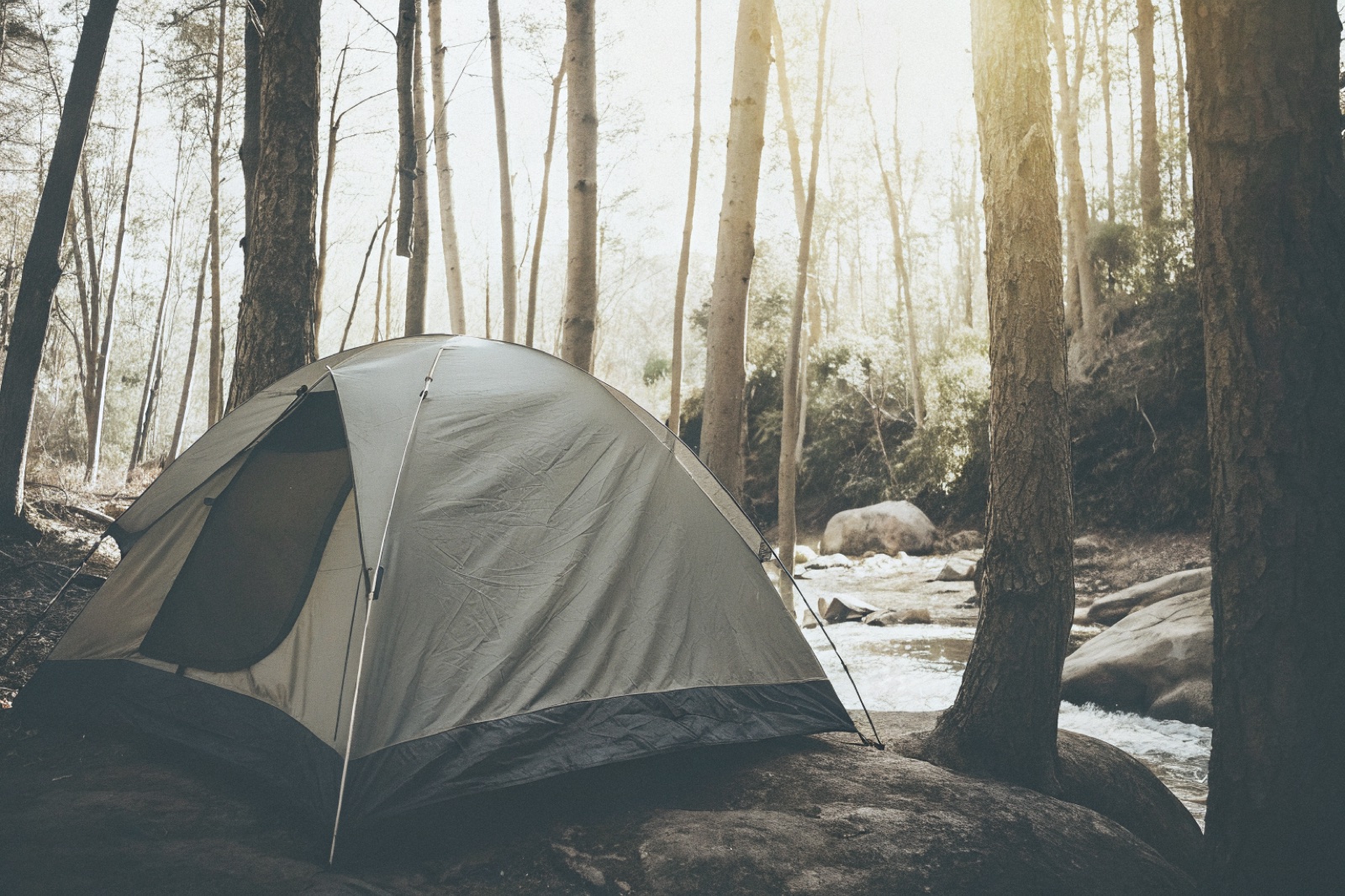
There is an afternoon in Đắk Lắk when you step out of the car, walk a few minutes into the dipterocarp forest, and discover your phone has no signal. Not because you are at the edge of the world. You are still about an hour from Buôn Ma Thuột. But the trees here stand tall and even, the late light filters down through wide leaves, the soil smells of recent rain, and every notification on your mind suddenly seems beside the point. This is the first minute of one night camping in the dipterocarp forest of Đắk Lắk — a single night that can shift your breathing for weeks afterward.
Camping in the dipterocarp forest of Đắk Lắk: why one night is enough
The dipterocarp forest of Tây Nguyên (the Vietnam Central Highlands) is unlike the rainforests of Cát Tiên or Bạch Mã. Trees here belong to the *Dipterocarpaceae* family — broad-leaved hardwoods that drop most of their canopy in the dry season and green up again with the rains. Light passes all the way down to the forest floor. Walking through the dipterocarp forest feels closer to crossing a wide stage held up by tall wooden columns than pushing through dense undergrowth.
A single night in this forest is enough to walk through four phases of attention that often take many trips to find. Late afternoon, while the sun still warms the grass, everything feels familiar. Dusk arrives, and things begin to feel new. At midnight, you sit up in the tent and listen to sounds you cannot quite name. By dawn, you wake before any alarm, because a bird has decided to sing close to your zipper. One overnight of camping in the dipterocarp forest of Đắk Lắk holds all four phases inside it.
Lonature walks alongside local partners who run overnight camping programs in Buôn Ma Thuột — a team of Ê Đê and M'Nông guides who have known the dipterocarp forest since childhood and have led trekking and camping for Vietnamese and international guests for years. Lonature is a link in this longer journey: helping partners hold their standards, supporting translation when international guests join, and making sure every group follows the *Leave No Trace* principles — leave nothing behind, take nothing with you except the trash you brought. Your presence in the forest, in this way, is itself a small contribution to conservation and to the livelihood of the local community.
Setting up camp in the late afternoon: from leaving the car to lighting the fire
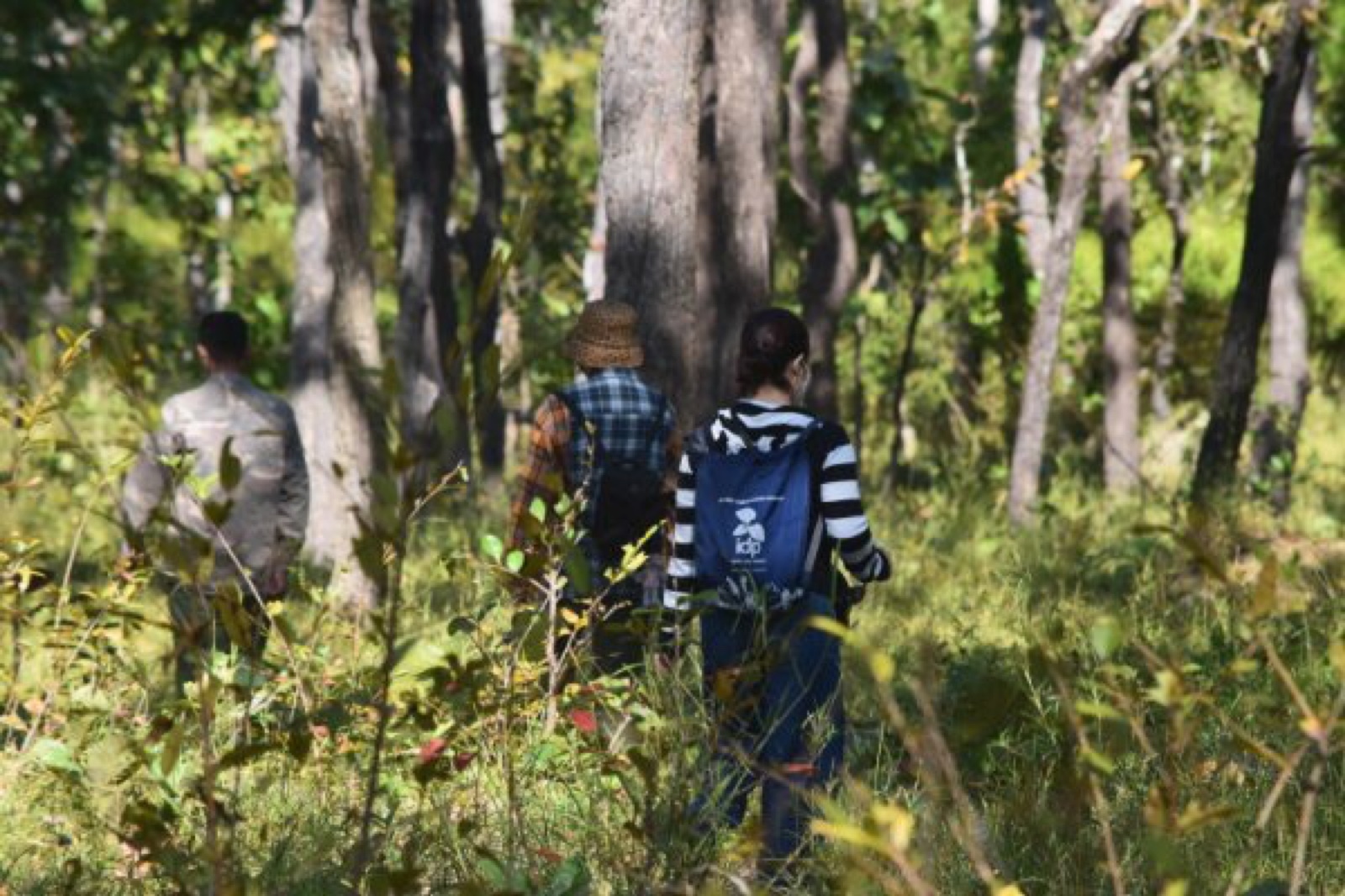
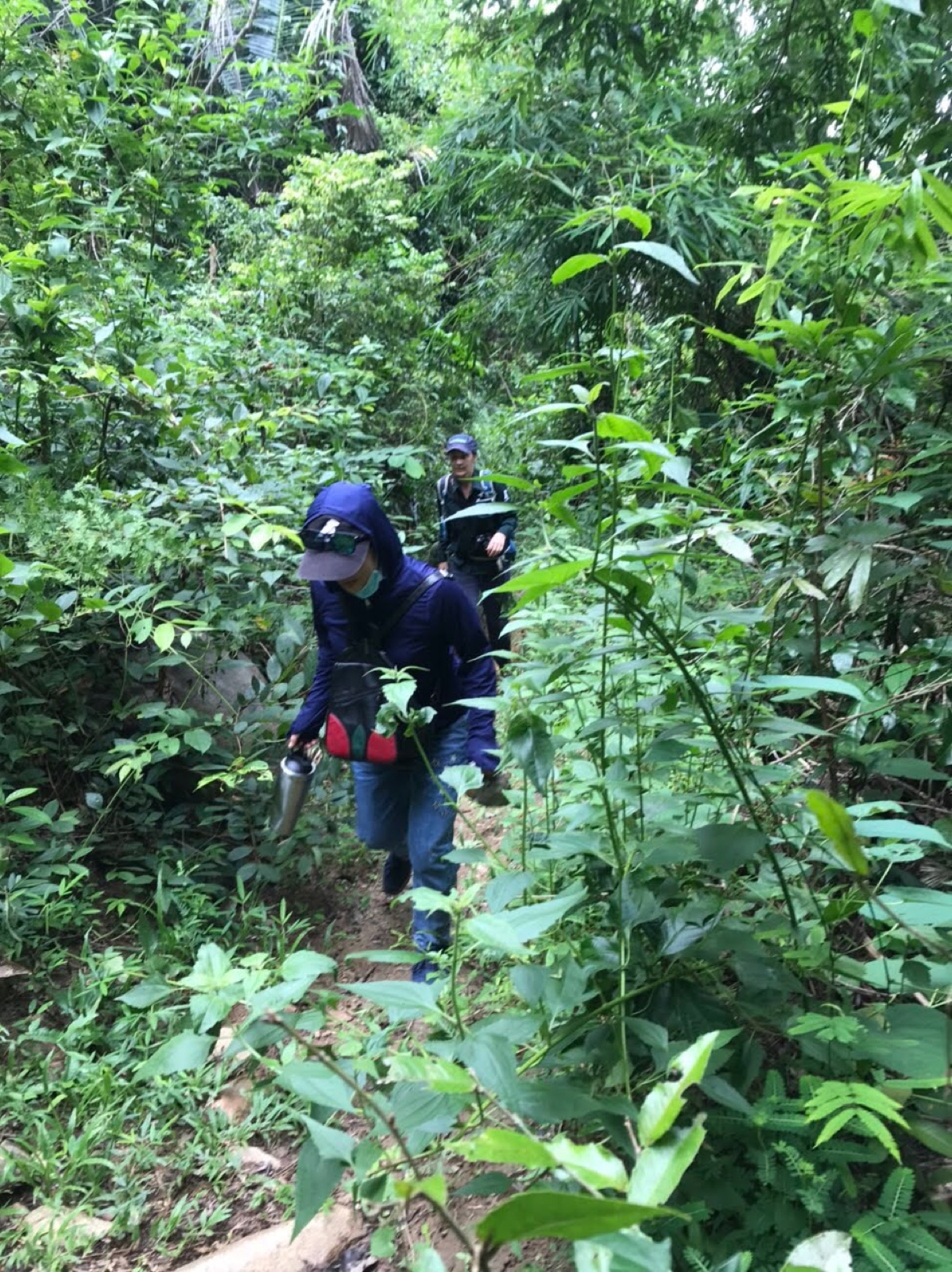
A camping trip starts the moment you leave the car, not when you raise your tent. The walk between the parking point and the campsite is usually one to two hours — long enough for your breathing to shift, and long enough for your guide to check your shoes, your backpack, and your water, the three things first-timers tend to underestimate.
Along the trail, the guide points out things you would never notice on your own: a deer print pressed into damp soil, the dry winged seed of a *dipterocarp* tree, a yellow ant nest stretching two meters across a branch, a leaf the M'Nông like to cook in soup, a grass that locals use to stop minor bleeding. This is the most undersold part of guided camping — you are not just walking through the forest, the forest is being read aloud to you.
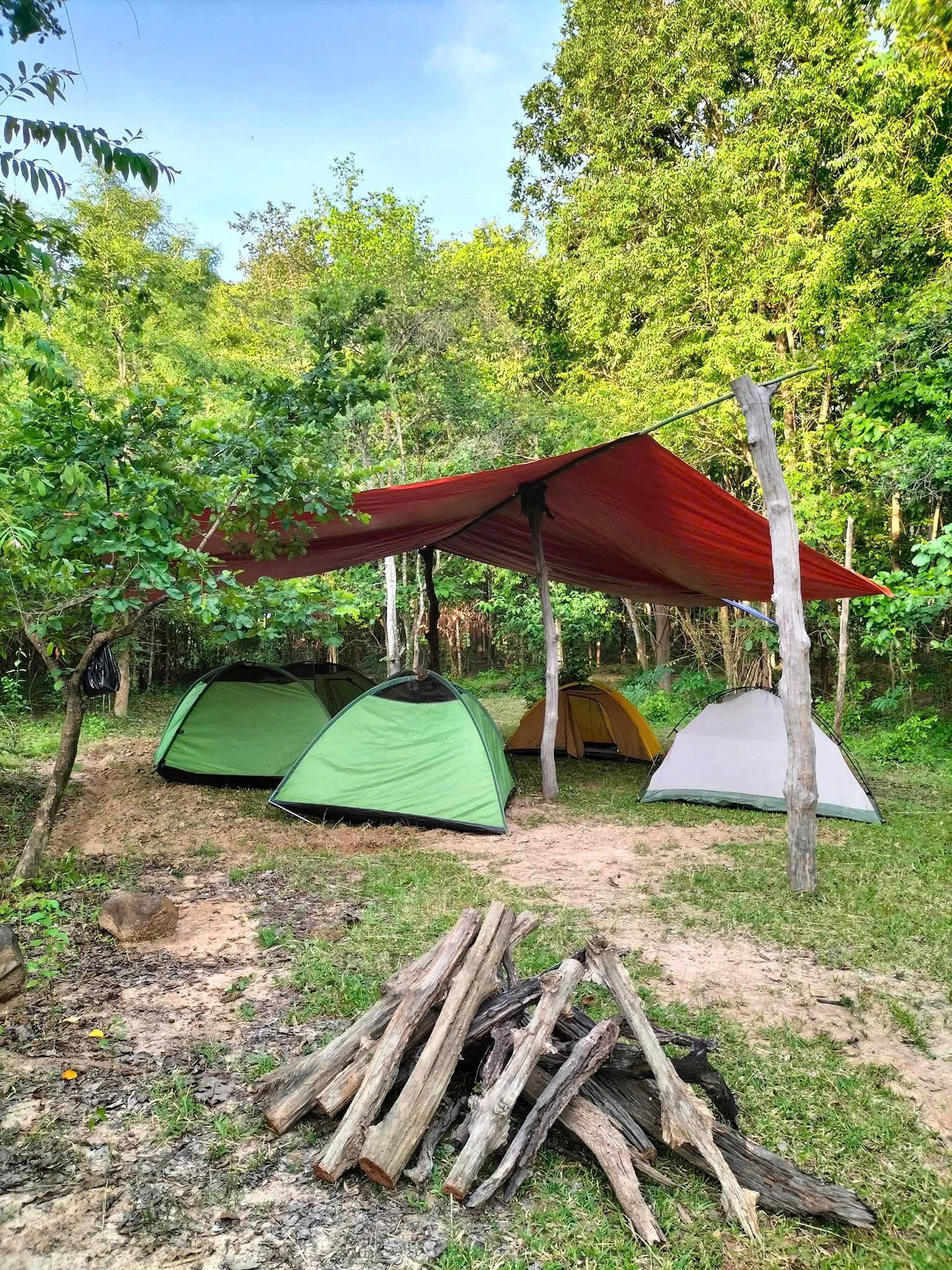
At the campsite, things proceed in order:
- Choose flat ground and avoid hollows where night dew settles and mosquitoes gather.
- Pitch the tent at least four meters from the fire and at least thirty meters from any stream — two safe distances for both you and the water source.
- Dig a small fire pit, ring it with stones, stack dry wood inside, and start it with shavings of dipterocarp bark rather than newspaper.
- Hang your backpack on a low branch to keep ants away; never lay it base-down on the ground.
- Run a single rope between two trees about two meters high — this becomes the line for towels, layers, and a hanging headlamp that lights the camp evenly.
Everything wraps before the sun sets. By the time you sit down by the fire, the wood is burning steadily, water is on the boil, and the dipterocarp wind passes through in slow waves carrying the smell of dried leaves. Many Lonature guests describe this as the moment they feel they have actually left the city, even after only a few hours of walking.
Night in the dipterocarp forest: sounds nothing like the city
A night in the dipterocarp forest is not silent. That is a common misconception for first-timers. It is full of sound — but the sounds come from a completely different library than the urban one. There are no horns, no air conditioners, no neighbor's television. Instead, you hear three layers of cricket calls at three different pitches, an owl exchanging notes with another owl about fifteen meters away, a branch dropping onto dry ground with a sharp brittle sound, a forest mouse running across dead leaves so light it sounds like footsteps.
Beginners are often nervous on the first night. That is a normal reflex. After about twenty minutes, your ears adjust, and you start to notice that every sound has a measurable distance, a clear origin. After an hour, you stop merely hearing — you begin to listen in.
"The first night is usually the hardest. By the second night, you no longer need the guide to reassure you."
The fire helps. Not because it scares away animals, but because it is an anchor for the eyes and the mind. You sit beside it, watch the wood burn slowly, hear it pop very softly. A few stories pass between you, no microphone, no background music. The guide may sing a short M'Nông folk song about mountains and forests. Sometimes there is no song, only a shared quiet, and that is enough. This is the part of camping in the dipterocarp forest of Đắk Lắk that resists being captured in photographs — you only really understand it after sitting beside a forest fire at ten o'clock at night.
Food and sleep: a light menu and a properly chosen sleeping bag
The camping menu in the dipterocarp forest of Đắk Lắk is not elaborate. This is what makes it different from the new wave of glamping where everything is delivered to the tent door. A typical evening with a Lonature partner includes *cơm lam* (rice steamed inside a fresh bamboo tube), one grilled dish — usually *gà nướng ống tre* (chicken grilled in bamboo) or local pork wrapped in forest leaves, a bowl of forest-leaf soup with bitter eggplant, and a small jar of *rượu cần* (communal rice wine sipped through a long reed). Everything is cooked on the single fire at the center of the camp, no gas stove, no electric appliance.
*Cơm lam* is better than most people expect. Hill rice is rinsed, soaked for twenty minutes, poured into a fresh bamboo tube with just enough water, sealed with a banana leaf, and propped beside the embers. After about forty-five minutes, the bamboo is charred outside while the rice inside is golden, soft, and faintly perfumed by the wood. You peel the bamboo back with your hands and eat the rice with sesame salt or chili-rock salt. This is the sort of dish that makes a person sit still longer than usual.
For sleeping, partners provide two-person or four-person tents, a thin insulating mat under the sleeping bag, and a sleeping bag rated for a minimum of about eighteen degrees Celsius — the typical low for most nights in the dipterocarp forest of Đắk Lắk. In the dry season from December through February, lows can drop near fifteen degrees, and you will want a thicker sleeping bag and long sleeves. The partner sends details by message a few days before so you have time to pack.
One detail Lonature often hears from returning guests: many sleep more deeply in the forest than in their hotel rooms. The reason is not exhaustion. The reason is clean air, full natural light during the day, and a night soundscape with a steady rhythm that helps the brain settle into deeper sleep. This is an unmarketed but very real benefit of sleeping outside, and it is a common reason guests come back for a second overnight within a few months.
Morning departure: leaving zero trace
Morning at a guided camping site in Đắk Lắk usually starts early. Around five thirty, the first light touches the canopy and a chorus of birds begins all at once. You step out of the tent, watch the mist drift between the trunks, accept a hot water cup from the guide, sit on a flat rock, drink slowly. Everything feels very different from waking in the city. You are not in a hurry. Nothing on your phone is asking for attention. Even just breathing seems sufficient.
After a light breakfast — usually an egg sandwich and a herbal tea — the group breaks camp following the *Leave No Trace* principles. All trash is sorted, sealed, carried back to the car. Ash is doused with water, stirred, and buried. The shallow tent depression is filled with soil and dry leaves. The goal is simple: when the group leaves, no one can guess that six people slept here the night before.
This is a part Lonature feels worth highlighting, because it is not always done well by other groups. A patch of trampled grass can take three months to recover. A candy wrapper left in the leaf litter can stay there for ten years. A fire pit not properly soaked can flare again four hours later when the wind changes direction. Camping in the dipterocarp forest of Đắk Lắk by the right principles is not difficult, as long as you are guided well from the very first trip — which is why Lonature only walks alongside partners with *Leave No Trace* already woven into their daily practice, not added on as a marketing label.
Five questions to prepare well for your first overnight
Before booking a camping program in Tây Nguyên, you may want to answer five simple questions. Together they capture much of what first-timers learn the hard way after a less-than-comfortable initial trip.
- Have you walked in trekking shoes on damp soil before? If not, take a five-kilometer walk in a hilly park to test your footwear before stepping into the forest.
- Do you have allergies to pollen, insect bites, or wood smoke? If so, bring your medication and tell the guide about it the moment you meet.
- How do you sleep at home — face down, face up, prone to waking up midway? Your honest answer helps you pick the right insulation mat thickness.
- How many hours do you spend on your phone each day? If more than six, prepare yourself mentally for the "no signal" syndrome of the first six hours — it does pass.
- Who are you traveling with? A friend who already knows the forest, a friend going for the first time, or just yourself? The answer shapes the entire energy of the group, and you should let the partner know in advance so they can split tents and groups well.
These five questions are not a way to disqualify yourself. They are a way to understand more clearly what you are walking into. Lonature partners help you prepare realistically, never overpromise, and send a final message three days before the trip with everything you should bring.
"Good camping is when you wake up the next morning wanting to come back, not when you return home swearing never to do it again."
If you feel ready for one night in the dipterocarp forest, you can begin with Lonature's 1.5-day walk-and-camp program, or warm up gently with a half-day forest walk to get used to the terrain first. Reach out via hello@lonature.vn to plan a slow-travel itinerary in Đắk Lắk.